
Home » What to Do When Your Business Can’t Pay Its Tax Bill: A Guide for Ontario Business Owners
Portal Login
Toll free 855 667 1727
100% accuracy guaranteed
What to Do When Your Business Can’t Pay Its Tax Bill: A Guide for Ontario Business Owners
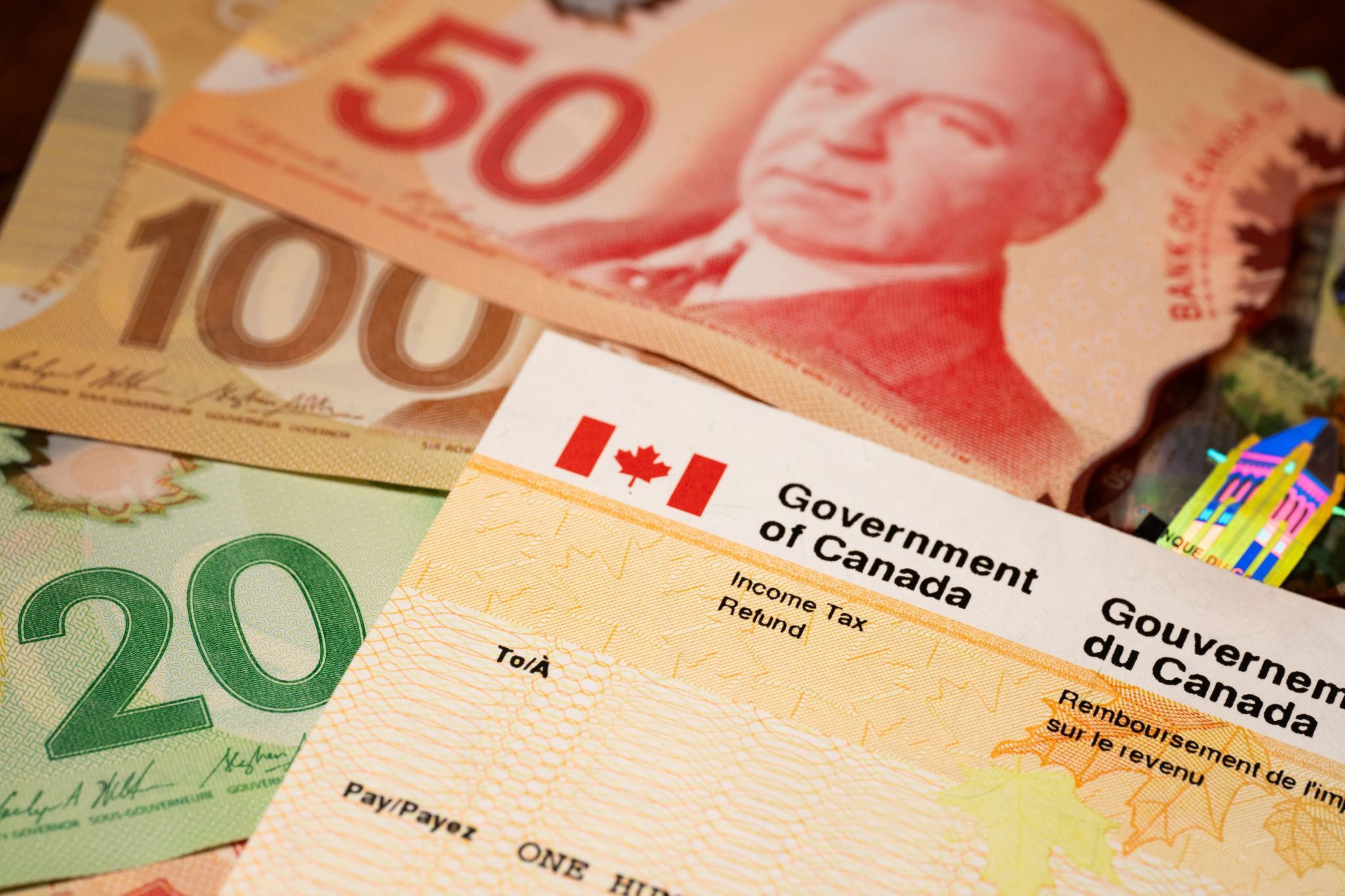
Your corporate tax return shows you owe $25,000. Your business account doesn't have $25,000. Now what?
It’s late February 2026, and accountants are finalizing corporate tax returns.
Business owners are discovering their 2025 tax liabilities.
The incorporated medical practice that had a strong income year but left too much cash in the corporation.
The professional services firm that grew revenue but didn’t adjust instalment payments.
The self-employed consultant whose income spiked but who didn’t set aside enough for taxes.
The numbers say they owe $15,000, $25,000, $40,000. And the deadline is approaching.
The first instinct is often panic. The second is avoidance—maybe if the problem sits, it goes away.
Neither helps.
At KKCPA, late February through June is when we have the most conversations that start with: “My business owes more than expected, and we don’t have the cash. What do we do?”
The answer depends on your situation, but there are options—and ignoring the problem is the worst one.
Here’s what Ontario business owners need to know when they can’t pay their tax bill.
First: File Your Return on Time Even If You Can’t Pay
This is the single most important piece of advice.
For corporations:
Filing deadline depends on your fiscal year-end. For a December 31, 2025 year-end, the corporate tax return (T2) is due June 30, 2026 (six months after year-end).
Payment deadline is two months after year-end: February 28, 2026 for December 31 year-ends. (This deadline has already passed for many corporations reading this in late February.)
For self-employed individuals (sole proprietors, partnerships):
Filing deadline: June 15, 2026
Payment deadline: April 30, 2026
Critical distinction:
- Late filing penalty: 5% of the balance owing, plus 1% per month for up to 12 months (maximum 17%)
- Late payment penalty: Interest charges on unpaid balance
If you file on time but pay late:
You face interest charges on the unpaid balance (currently prescribed at rates set by CRA quarterly), but you avoid the late filing penalty.
If you file late AND pay late:
You face both the late filing penalty AND interest on the unpaid amount.
Example:
Your corporation owes $25,000 and doesn’t have the cash by the payment deadline.
If you file on time:
- No late filing penalty
- Interest charges accrue on $25,000 (approximately 10% annually, compounded daily)
If you file late (say, two months after deadline):
- Late filing penalty: $25,000 × 5% = $1,250 (for first month)
- Additional 1% per month: $25,000 × 1% = $250 (for second month)
- Total penalty for 2 months late: $1,500
- Plus interest on the original $25,000
The late filing penalty alone costs you $1,500 that you wouldn’t owe if you filed on time.
Bottom line:
File your return on time even if you can’t pay. This avoids the late filing penalty and keeps your options open for addressing the payment.
Understanding CRA’s Interest and Penalties
When you owe money to CRA and don’t pay by the deadline, here’s what happens:
Interest Charges
CRA charges compound daily interest on unpaid balances.
Current prescribed interest rates (as of Q1 2026):
- Overdue taxes: Base rate + 4%
- Prescribed base rate fluctuates quarterly
As of February 2026, the total interest rate on overdue taxes is approximately 10% annually, compounded daily.
What this means:
A $15,000 unpaid tax bill accrues approximately $1,500 in interest over one year if left unpaid.
Interest starts accruing: May 1, 2026 (the day after the payment deadline)
Late Filing Penalty
If you file your return after April 30:
- 5% of the balance owing
- Plus 1% of the balance owing for each complete month your return is late (up to 12 months maximum)
- Maximum late filing penalty: 17% of the balance owing
If you’ve been charged a late filing penalty in any of the previous three years:
The penalty doubles:
- 10% of the balance owing
- Plus 2% per month (up to 20 months)
- Maximum: 50% of the balance owing
This “repeat offender” penalty is severe.
Instalment Interest and Penalties
If you were required to make quarterly tax instalments during 2025 and didn’t (or underpaid), you may also face instalment interest charges.
This is separate from the interest on your final balance owing.
Who needs to pay instalments:
If your net tax owing (federal and provincial combined) exceeds $3,000 in the current year and either of the two previous years, you’re generally required to make quarterly instalment payments.
Medical professionals, self-employed individuals, and incorporated business owners taking dividends often fall into this category.
Your Options When You Can’t Pay
Option 1: Pay with a Credit Card
CRA accepts credit card payments through third-party service providers, which charge a fee (typically 1.5% to 2.5%).
The trade-off:
You avoid CRA collections activity immediately, but if you’re using a high-interest credit card without a plan to pay it off quickly, you’re potentially trading 10% CRA interest for 19.99% credit card interest.
This can make sense with a low-interest card and a short payoff timeline. It rarely makes sense otherwise.
Option 2: Line of Credit or Business Loan
Business lines of credit typically range from 7-12% interest, which can be lower than CRA’s ~10% rate.
The considerations:
Does borrowing affect your business’s ability to access credit for operational needs? Can the business realistically service the debt? Are you solving a one-time tax shortfall or a recurring cash flow problem?
The math might work, but the strategic implications require analysis.
Option 3: Payment Arrangement with CRA
CRA may allow payment arrangements where you pay the balance over time.
The reality:
They’re not required to accept an arrangement. Interest continues accruing on the unpaid balance at ~10% annually even if they do agree. Missing a payment under an approved arrangement can result in immediate collections action.
Whether CRA accepts a payment arrangement depends on your payment history, financial situation, and the reasonableness of your proposal.
This isn’t something you set up casually—it requires proper financial disclosure and realistic commitments.
Option 4: Reduce the Amount You Owe (If Possible)
Before exploring payment options, confirm the amount is correct.
Missed deductions, unclaimed CCA, improperly categorized expenses, or errors in assessment can sometimes reduce the amount owing.
But this requires a thorough review of your return and business finances, not a quick scan.
Option 5: Taxpayer Relief (In Exceptional Circumstances)
CRA has taxpayer relief provisions that can waive penalties and interest in extraordinary circumstances—serious illness, natural disaster, significant hardship, or CRA errors.
“I didn’t set aside enough money” doesn’t qualify. This is for genuinely exceptional situations where enforcing penalties would be unfair.
And it only applies to penalties and interest, not the underlying tax owing.
What Happens If You Do Nothing
Some business owners think: “If we don’t pay, maybe CRA won’t pursue it aggressively.”
They pursue it.
Here’s what happens:
Stage 1: Initial Contact
CRA sends an initial reminder letter about the unpaid balance.
Interest continues accruing daily.
Stage 2: Additional Notices
More reminder letters with increasing urgency.
Interest continues accruing.
Stage 3: Collections Action
CRA Collections Division becomes involved.
Actions they can take:
Garnishment of business receivables:
CRA can legally require your clients/customers to send payments directly to CRA instead of to your business.
Garnishment of bank accounts:
CRA can freeze business bank accounts and seize funds to pay the debt.
Seizure of assets:
CRA can seize and sell business assets (equipment, vehicles, inventory) to satisfy the debt.
Withholding GST/HST refunds:
Any GST/HST refunds or other government payments to the business are automatically applied to outstanding balances.
Director liability (for corporations):
Corporate directors can be held personally liable for unremitted source deductions (payroll taxes) and GST/HST.
Legal action:
CRA can obtain a judgment in Federal Court, which allows them to pursue collection through legal means.
The impact:
Collections activity disrupts business operations, damages relationships with clients (if receivables are garnished), and creates significant stress.
The amount grows, your options shrink, and resolution becomes harder.
Special Considerations for Different Taxpayer Types
Self-Employed Individuals
If your income fluctuated significantly in 2025, you may owe more than expected.
The planning issue:
Unlike employees with tax withheld at source, self-employed individuals must set aside money for taxes throughout the year.
If you didn’t, you face a lump sum owing at tax time.
Going forward:
- Calculate estimated tax quarterly
- Set aside 25-30% of net income for taxes
- Make instalment payments if required (avoids instalment interest)
- Work with an accountant to project tax liability in real time
For 2025 tax owing:
If this is a one-time spike due to exceptional income, explain this to CRA when requesting a payment arrangement.
If it’s a recurring pattern, you need to fix the underlying problem (inadequate tax planning and cash management).
Incorporated Business Owners Taking Dividends
Dividend income isn’t subject to withholding tax at source.
The surprise:
You took $80,000 in dividends in 2025. You didn’t realize the personal tax owing would be $18,000.
Now you’re facing a tax bill you didn’t budget for.
The pattern:
This happens when business owners:
- Take dividends without calculating personal tax impact
- Assume “the corporation already paid tax” means they won’t owe personally
- Don’t make instalment payments during the year
Going forward:
- Calculate personal tax impact before taking dividends
- Consider salary vs. dividend mix for better tax management
- Make quarterly instalment payments
- Work with an accountant on integrated corporate and personal tax planning
Medical Professionals with Variable OHIP Income
OHIP billings fluctuate month-to-month based on patient volume, procedures, and seasonal patterns.
The problem:
Your 2024 income was $280,000. Your 2025 income spiked to $380,000 due to higher patient volume and additional procedures.
Your instalment payments were based on 2024 income, so they’re insufficient for 2025.
You now owe $22,000 at tax time.
Why this happens:
CRA calculates required instalments based on prior year income. If current year income is significantly higher, instalments undershoot the actual tax liability.
Going forward:
- Monitor year-to-date billings quarterly
- Adjust instalment payments mid-year if income is tracking higher
- Set aside additional funds beyond instalments if you see income increasing
- Work with an accountant who understands medical practice cash flow
For current year owing:
Medical practices often have cash flow constraints due to billing cycles, equipment purchases, and overhead.
When requesting tax bill payment arrangements, explain the nature of medical practice cash flow and your ability to make monthly payments.
The Conversation You Should Have With Your Accountant
If you’re facing a tax bill you can’t pay, talk to your accountant before making decisions.
Questions to ask:
1. “Is the assessment correct?”
Have them review your return for missed deductions or errors.
2. “What are my realistic payment options given my cash flow?”
They can help model different scenarios (payment plan, line of credit, credit card).
3. “Should I contact CRA proactively or wait?”
Usually proactive contact is better, but there are situations where timing matters.
4. “How do I avoid this next year?”
The immediate crisis matters, but fixing the underlying issue (inadequate planning, insufficient instalments, poor cash management) prevents recurrence.
5. “Do I qualify for any taxpayer relief provisions?”
Your accountant can assess whether your circumstances might warrant a relief request.
The Complexity Most Business Owners Underestimate
When facing a tax bill they can’t pay, business owners often think the solution is straightforward: borrow the money, set up a payment plan, or negotiate with CRA.
The reality is more complex.
The questions that need answering:
- Can your business afford to service debt at 9-12% interest while maintaining operations?
- Will a payment arrangement with CRA affect your ability to obtain other business financing?
- Is this a one-time spike or a symptom of recurring tax planning problems?
- What are the cash flow implications of different payment scenarios?
- How does this interact with your corporate structure and compensation strategy?
- What happens to your instalment obligations for the current year while you’re paying last year’s debt?
Each situation requires analysis specific to your business finances, industry, and circumstances.
For corporations with December 31, 2025 year-ends:
The payment deadline was February 28, 2026. If you’re reading this in late February and haven’t paid, you’re already facing interest charges and need to act immediately.
For self-employed businesses:
The payment deadline is April 30, 2026. You have time to explore options, but waiting until late April limits your choices.
The underlying problem:
If your business owes unexpectedly this year, something in your tax planning or cash management isn’t working. Addressing just the immediate payment crisis without fixing the root cause means you’ll face this again next year.
The Bottom Line
Your business owing taxes it can’t immediately pay is stressful, but it’s not unsolvable.
The worst thing you can do with a tax bill is ignore it. The best thing you can do is file on time, assess your options realistically, and take action.
CRA’s interest rates (~10%) aren’t cheap, but they’re often better than credit card rates and comparable to business lines of credit.
If you can pay via low-interest business borrowing, that eliminates CRA collections risk and stops the interest clock.
If you need a payment plan, contact CRA proactively. They’re more willing to work with businesses that communicate and demonstrate good faith.
And most importantly: fix the underlying problem. If your business owes unexpectedly this year, it’s likely because of inadequate tax planning, insufficient instalments, or poor cash flow management.
Addressing those issues prevents you from facing the same situation next year.
Need Help With a Business Tax Bill You Can’t Pay?
At KK CPA, we help Ontario business owners navigate unexpected tax liabilities and develop strategies for payment and prevention.
We can help you:
- Review your corporate or business tax assessment for accuracy and missed deductions
- Model payment options and business cash flow implications
- Communicate with CRA on your behalf regarding payment arrangements
- Implement corporate and personal tax integration strategies
- Develop instalment payment systems to avoid future shortfalls
- Plan salary vs. dividend strategies to optimize tax outcomes
Don’t face this alone. Get professional guidance on your tax bill options and long-term tax strategy.
📍 Serving Ontario businesses including Hamilton, Ancaster, Burlington, and the Greater Toronto Area
📞 Toll Free: 855-667-1727
Related Reading: